 Sign in
Displaying 1 to 15 of 44 Publications
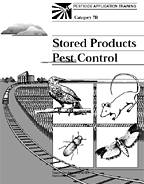
Stored Products Pest Control, 7B
by F. Robert Henderson Randall Higgins John R. Pederson
S16
Pests in stored grain and food products (stored product insects, cockroaches, rodents and birds), includes fumigation. 63 pages, B/W.
Revision Date: Oct 1996


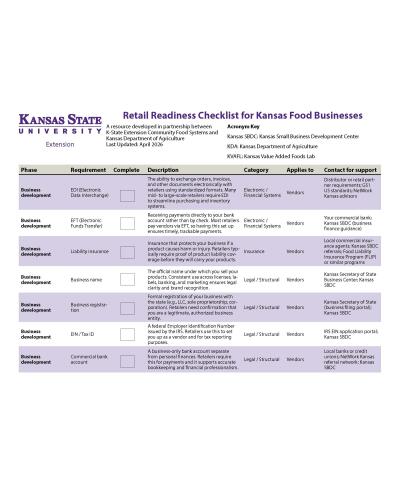
Retail Readiness Checklist for Kansas Food Businesses
MF3739
This resource, developed in partnership between K-State Extension Community Food Systems and the Kansas Department of Agriculture, helps food businesses navigate the procedures they need to follow to be able to sell their products in Kansas. 8 pages, color.
Published Date: May 2026
Food Safety: Good Manufacturing Practices
MF3201
Updated for 2026. Good manufacturing practices can help ensure the safety of processed and packaged food. Includes important considerations and suggestions for food producers and processors. 2 pages, color.
Revision Date: Jun 2026
Selling Safe Canned Foods in Kansas
MF3555
Updated for 2026. Many small-scale food processors are making and selling canned, shelf-stable foods such as pickles, salsas, or jams and jellies. Such products must be prepared safely and be incompliance with food safety regulations. This fact sheet answers some frequently asked questions about selling safe canned foods. 4 pages, color.
Revision Date: Jun 2026
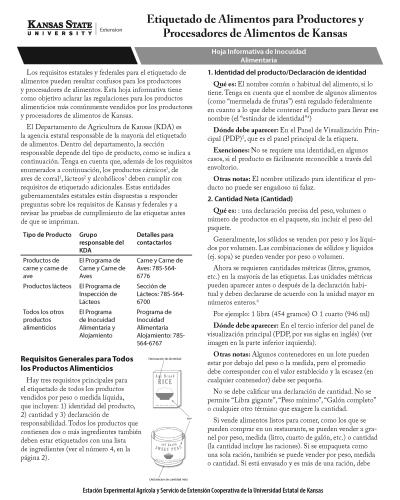
Spanish: Food Labeling for Kansas Food Producers and Processors
MF3385S
Revised for 2026 and translated into Spanish. State and federal food labeling requirements can be confusing. This fact sheet clarifies regulations for the food products most commonly sold by Kansas food producers and processors. 4 pages, b/w.
Revision Date: May 2026
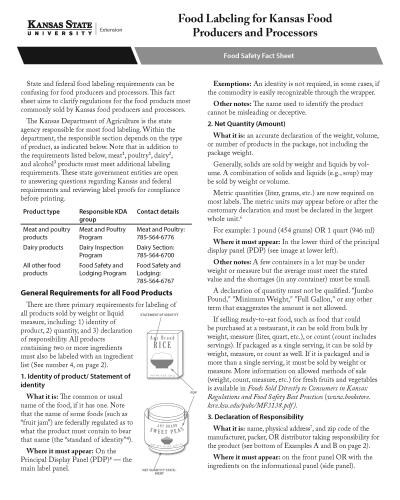
Food Labeling for Kansas Food Producers and Processors
MF3385
Revised for 2026. State and federal food labeling requirements can be confusing. This fact sheet clarifies regulations for the food products most commonly sold by Kansas food producers and processors. 4 pages, b/w.
Revision Date: May 2026
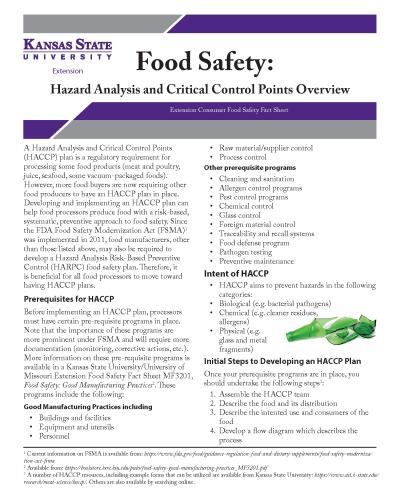
Food Safety: Hazard Analysis and Critical Control Points Overview
MF3202
Updated for 2026. An HACCP plan is a regulatory requirement for processing some food products, and helps prevent biological, chemical, and physical contaminants in food processing. This publication includes an outline of the steps to develop an HACCP plan and additional resources and considerations. 4 pages, color.
Revision Date: Jun 2026
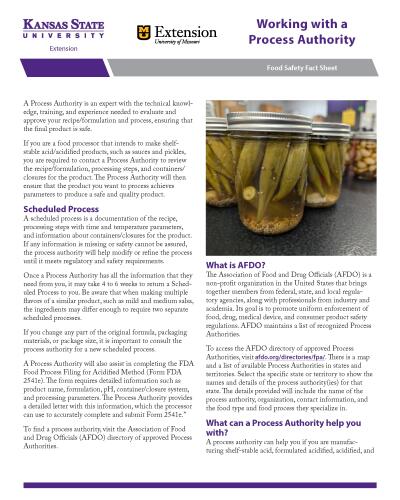
Working with a Process Authority
MF3731
If you are a food processor that intends to make shelf-stable acid/acidified products, such as sauces and pickles, you are required to contact a Process Authority to review the recipe/formulation, processing steps, and containers/closures for the product. The Process Authority will then ensure that the product you want to process achieves parameters to produce a safe and quality product. 4 pages, color.
Published Date: Mar 2026
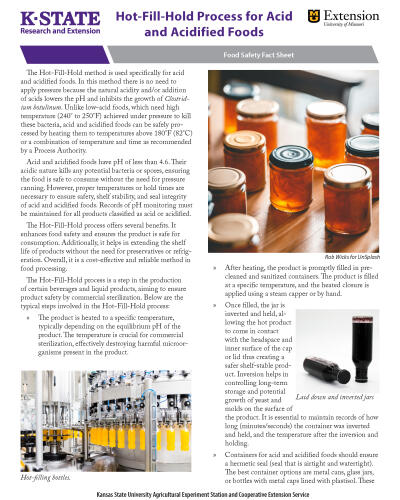
Hot-Fill-Hold Process for Acid and Acidified Foods
MF3671
The Hot-Fill-Hold method is used specifically for acid and acidified foods. In this method there is no need to apply pressure because the natural acidity and/or addition of acids lowers the pH and inhibits the growth harmful bacteria. This fact sheet outlines the process and some of the factors involved. 4 pages, color.
Revision Date: Sep 2024
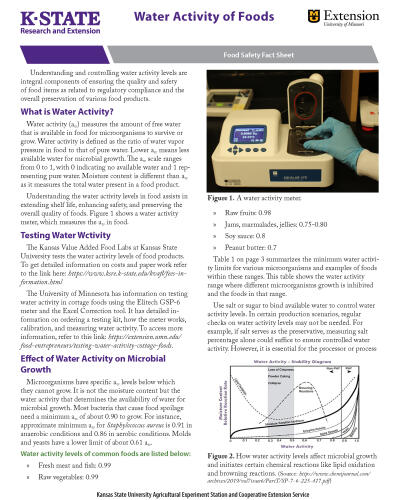
Water Activity of Foods
MF3674
Understanding and controlling water activity levels are integral components of ensuring the quality and safety of food items as related to regulatory compliance and the overall preservation of various food products. 4 pages, color.
Revision Date: Sep 2024
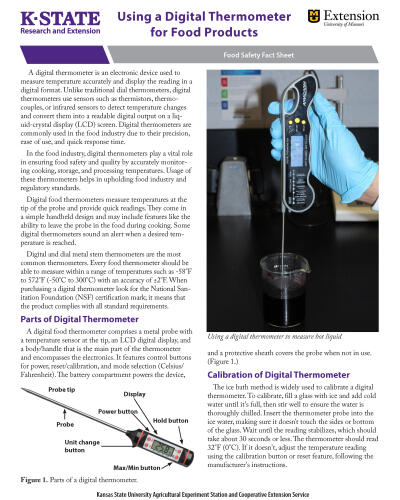
Using a Digital Thermometer for Food Products
MF3673
In the food industry, digital thermometers play a vital role in ensuring food safety and quality by accurately monitoring cooking, storage, and processing temperatures. Usage of these thermometers helps in upholding food industry and regulatory standards. This fact sheet outlines the uses of digital thermometers and calibration tips. 2 pages, color.
Published Date: Sep 2024
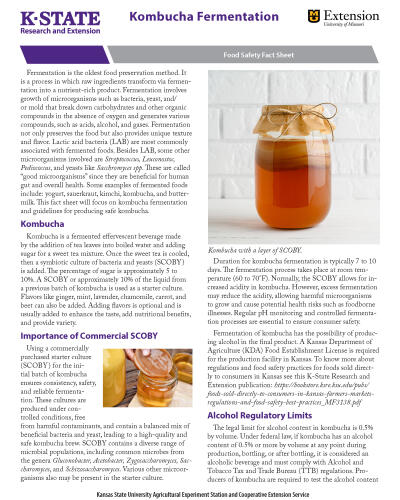
Kombucha Fermentation
MF3672
Kombucha is a fermented effervescent beverage made by the addition of tea leaves into boiled water and adding sugar for a sweet tea mixture. Once the sweet tea is cooled, then a symbiotic culture of bacteria and yeasts is added. This fact sheet outlines the process and some factors to consider. 2 pages, color.
Published Date: Sep 2024
Wheat Tempering: Mixer Alternatives
by Mark Fowler
MF3076
To maximize extraction of flour, millers mix water into wheat as part of its preparation for the milling process. Tempering wheat to the optimal milling moisture softens endosperm while toughening bran. Tempering mixers add five to seven percent water in a single stage. 2 p.Published Date: Mar 2013
Meat Product Labeling and Marketing: What Do All Those Words Really Mean?
by Londa Nwadike Travis O'Quinn
MF3209
Meat product labels include terms that may be confusing to consumers. This publication explains terms such as "natural," "organic," or "grass-fed," as well as explaining the USDA meat grading system and other product claims. 8-page, color.Published Date: May 2015
Guide to Managing Safety for Employers and Supervisors, Spanish: Guía para el manejode la seguridad Para empleados y supervisores
by Mitch Ricketts Kristy Wieland
MF2763S
Spanish booklet on preventing injuries in a workplace. Information on effective safety plans, government regulations, training employees with limited English or reading skills.Published Date: Feb 2008
Displaying 1 to 15 of 44 Publications
